
Disarming Trigger Words
It seems that many people needn’t go very far to find a reason to be offended. Occasionally, the offense is real … or serious … or intentional. Most of the time, however, people seem to go out of their way to look for reasons to take offense at a comment someone has made. I’m grateful for the light being shone on the dark pattern of the sexual abuse of women by powerful men, and at the same time, I see us heading down a dangerous path where we’re policing every comment, parsing every joke, turning the figurative furniture upside down to find the intentional slight that might not actually be there. After the pendulum has swung from one extreme to the other, the center on any issue is the place of common ground – and yet it’s often the most challenging to achieve.
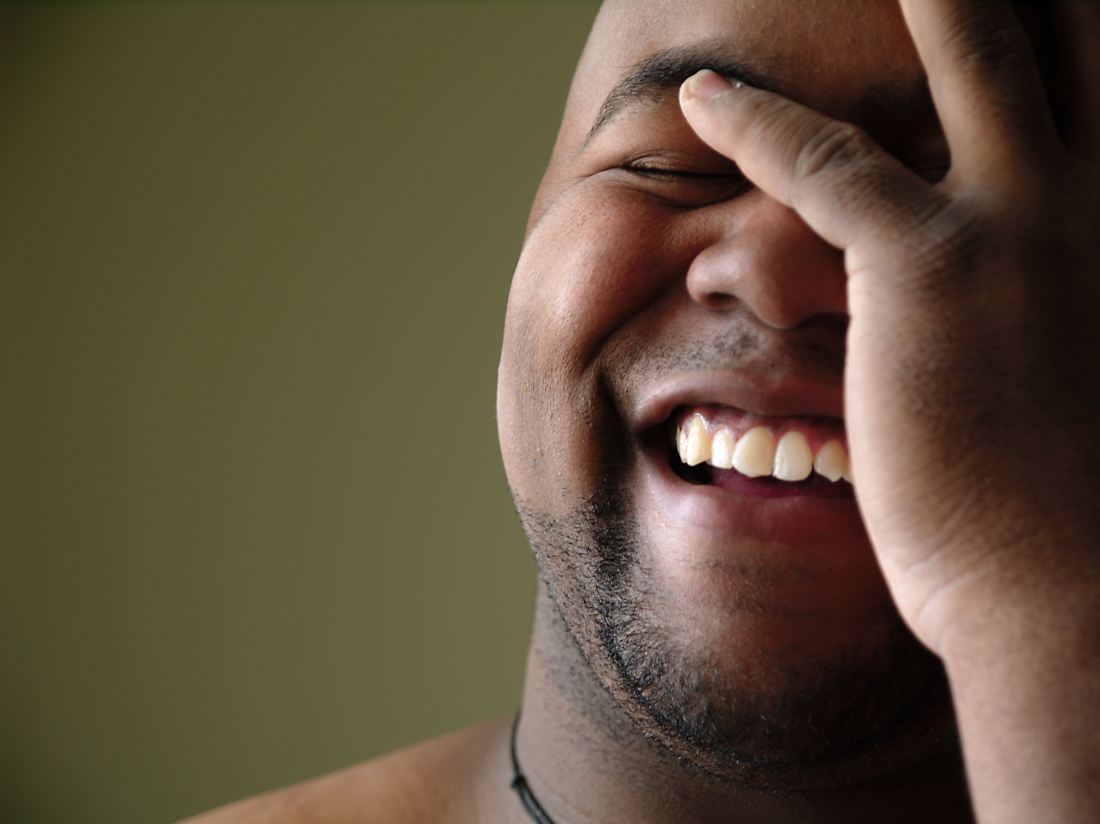
I am concerned that in this overzealous watchful state we’re in, we may be losing our collective sense of humor. Now senses of humor run a large gamut – and there’s all kinds of comedy. I’ve never been a big fan of puns or slapstick, for instance, yet my husband loves the Marx Brothers. When I was in high school, my boyfriend and all of his friends were huge Monty Python fans, so much so that they’d committed every word of Monty Python and the Holy Grail to memory and would spout lines from it at the oddest times. It wasn’t until years later that I could even crack a smile at a sketch from those crazy Brits. Go find the Dead Parrot Sketch if you’ve never seen a Python skit.
It would be interesting – from a purely sociological perspective – to be able to rewind the scenes from my childhood to see what went into my humor development, or lack thereof. My sister seemed to share my humor-challenged state, so I have a suspicion it had to do with my dad. I remember telling Mary, my social worker at the adoption agency, how serious my dad always was – almost as if he regarded pleasure of any kind as frivolous at best, and sinful at worst. She referred to him as an ascetic – a word I had to look up at the time. In case you’re wondering, the Google dictionary defines it as: “characterized by or suggesting the practice of severe self-discipline and abstention from all forms of indulgence, typically for religious reasons.” Dad loosened up toward the end of his life. I couldn’t say what, exactly, triggered the change, but it was nice to see him enjoy dessert or laugh at a goofy joke.
So it’s really no wonder that my own sense of humor was slow to develop and then to evolve. I thank my husband, John, in great part for helping me with that, although I don’t think we’d have hit it off very well if I hadn’t already done a lot of personal work in the area of lightening the fuck up.
When I was in high school, I went to a Spring Training game with the Monty Python boyfriend. We were at the snack bar, and I went to get some napkins. There was a pile on the counter, so I grabbed them, not realizing they were sitting on top of another fan’s tray. He looked at me a bit perplexed and asked me what I was doing, so Anthony and his friends laughed at my goof – because it was funny. But I was humiliated. At that time, I had zero ability to laugh at myself or let a silly mistake like that roll off my back.
Years later, I was back in Phoenix working as a substitute teacher, when one little girl in my class tripped and fell. Immediately, most of the other students laughed at her. I chastised them – someone falling isn’t funny. They piped up to me that their teacher always laughed whenever any of the kids fell down. I was incensed and told them told them that their teacher was WRONG! People falling down is never funny. But if that were true, America’s Funniest Home Videos would never have been the hit it was, right? It wasn’t my kind of humor – still isn’t. I think it’s because I find it difficult to take pleasure in humor that comes at another person’s expense. But a lot of people do find it funny when someone else falls down or otherwise blunders.
Yet there are things I find funny today which I realize would anger – perhaps enrage – other people. Religious humor, for one thing. John and I watched a 2009 Jim Jeffries comedy special the other day, and his anti-religion jokes were simply scathing. Funny – but really, really harsh.
So having discovered my sense of humor a bit later in life, I also learned that I needn’t be offended every time someone makes a toss-off comment about adoption. You might have heard a parent say, when their kid has misbehaved in some way, “You’re not my kid. You must have been adopted” or “I should have just put you up for adoption.” It’s probably not the kindest thing to say to a child in any circumstance, but I get that we all say things in frustration, at times. What I no longer do is get my back up when I hear it the way I used to.
I have a friend whose adult son struggles with mental health issues. Her trigger words are “crazy” and any derivation or synonym thereof. For others, it’s anything to do with addiction or obesity or the word “retarded.” I’m willing to bet that many of us have a word or a term or a topic we think is just taboo for joking about – maybe more than one. While I do believe that most of us could probably use some sensitivity training and take more care with our speech, I also know that people are just going to say things.
I don’t believe the world owes us a bubble in which to live. Sure – speech that incites hate or violence is a real problem, but for the most part, that’s not what we’re talking about here. We’re talking about the habit we seem to be developing of feeling superior to others by finding ways to make them wrong. If we walk around all day listening for words or jokes or speech patterns that offend us, we will find them. And then what? Do we make it our mission in life to educate every person who “misspeaks”? Do we publicly shame them or call them out because we felt slighted? Worse still, do we go out of our way take offense on others’ behalves? Do we make YouTube videos or write endless Facebook posts about how wicked this person or that category of people is? This seems to be happening more and more these days, and all it’s doing is sowing more division, rather than in any way bringing us together.
Perhaps we can try – again – to meet in the middle. Let’s all be a little more aware of the language we’re using, and at the same time, let’s all just relax a bit, realizing that it sometimes might be OK to laugh at ourselves.
____________________
Laura Orsini is an author, speaker, and consultant who coaches other authors to make and market exceptional books that change the world for the better. She is birthmother to Eric, who is finishing college in Boston this summer. Their adoption has been open for the better part of Eric’s life. She continues to toy with the idea that these posts will one day become a book. In the meantime, you can learn about her novel in progress, Stan Finds Himself on the Other Side of the World.

 Eric's Other Mother