
Pulpwood Queens and an Adoption Theme
Today is the first day of the 2018 LA Festival of Books. I am here with a colleague, Birgit Walker, who with her husband Jim, cowrote Keep Your Paws on the Road, about teaching your dog to be a great travel companion. I am also representing about a dozen other Phoenix-area authors’ books – titles ranging from Hollywood crime fiction to a Western to spiritual books to children’s picture books, and lots of others in between.
So it seems the perfect time to offer up a few comments on some recent books I’ve read. In January, I attended my first Pulpwood Queen Girlfriend Weekend in Nacogdoches, Texas. This was not a meeting of female lumberjacks, but rather the 18th annual gathering of book lovers – also known as readers – and a slew of amazingly accomplished authors. Started by a woman named Kathy Murphy, Pulpwood Queens is a book club that grew from one meeting in Kathy’s hair salon to more than 700 clubs around the world! These are some serious book lovers, and Kathy has created such a level of influence in the industry that she can pull household name authors to her event. On the flip side, she also has helped launch more than a few authors out of obscurity into a new level of fame.
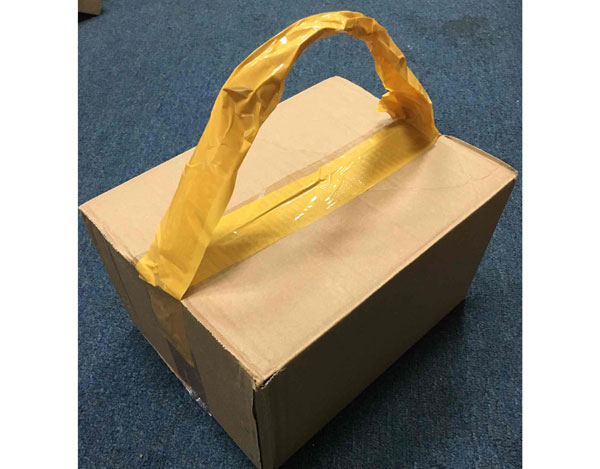
The weekend was packed with panel discussion after panel discussion wherein the authors shared their stories, discussed their creative motivations, and encouraged the writers in the audience to follow their passions. I came home with so many books that I had to pack a boxful to carry as luggage for the plane. You should have seen my very stylish packing tape handle. Laugh all you want; I was able to get myself from the rental car to the shuttle to the ticket counter with my fabricated tape handle. Of course, I received a love note from the TSA that they had searched my carefully taped box. For my safety – of course it was.
Author Katrina Shawver, my roommate for the Pulpwood Queen event, which takes place every year over MLK Weekend, told me her New Year’s resolution was to read a book a week in 2018. When I met him, my husband could – and did – read a book about every 2 to 3 days. I don’t think I’ve read more than 20 books in a year since college. So the idea of reading a book a week sounded like a pretty significant goal to me. In the 3 months since that weekend when I purchased, won, and was gifted all of those books, I have read five, about which I’m feeling pretty good. Once upon a time, my reading ratio was more or less 95 percent fiction to 5 percent nonfiction. Sometime over the last 20 years, it hasn’t exactly reversed, but it’s been more like 35 fiction to 65 nonfiction. These five books I read were all novels, so I’ve gone and skewed my recent ratio quite a bit.
A quote from Stephen King comes to mind: “If you want to be a writer, you must do two things above all others: read a lot and write a lot. There’s no way around these two things that I’m aware of, no shortcut.” This blog has been my exercise in steady, if not daily writing, lo these last 3+ months. And I seem to be upping my reading – especially of fiction – quite a bit, as well. So maybe there is hope for me as a writer after all.

One interesting thing occurred as I listened to the authors speak over this very intense weekend – adoption seemed to be a thread running through a surprising number of the books. I had started this blog about two weeks earlier, so immediately thought I would read and write about these books. It has taken me until now to do so. I understand from the Pulpwood Queens Facebook group that the first author I will mention, Lisa Wingate, has recently sold her millionth copy of Before We Were Yours, no small feat. This is her 30th book, so she’s one of those many-years-to-get-there overnight successes. The book is the heartbreaking fictional story of a family impacted by a real-life monster by the name of Georgia Tann, a woman who literally stole babies and small children away from poor and “undeserving” families and sold them to wealthier people – all in the name of “the good of the child.” This child trafficking ring, covered up by police, judges, and child “welfare” workers ran from the 1920s to the 1950s. The book is extraordinarily well written, but truly a gut-wrenching read. I’m amazed it’s found such purchase among a wide audience, but happy for Lisa – of whom I asked a question about birthmothers during the Q&A and spoke with briefly as she signed my book – and grateful to have more light shone on such a dark era for American adoption.
Another “adoption” themed book whose author I heard speak is titled The Cage-maker, by Nicole Seitz. This book uses an interesting device, in that it tells the story of a wealthy family and the “curse” that seems to follow them across the years through the lens of letters, journal entries, and newspaper articles. The writing is eloquent and lyrical – but the story is slow-moving and a bit challenging to follow because of the device of telling it in bits and pieces, not all of them chronological. A modern-day woman who writes a DIY home decorating blog unexpectedly inherits the birdcage – with the promise that it will reveal the identity of her birthmother. She reads the letters, journal entries, and newspaper clippings and very occasionally comments on them as the story progresses. The bigger problem than the slow-moving nature of the book is that the adoption angle is utterly unnecessary to the story. In fact, it’s just confusing. Why make the heir an adopted person with no interest in knowledge about her birthfamily, when making her a long-lost niece would have worked just as well?
Then there was Cherry Bomb, a debut novel by a lovely woman named Susan Cushman. This freshman effort has received some glowing reviews; nevertheless, I found it a ridiculous and annoying read. It tells the story of a young graffiti artist who was abandoned by her mother at the age of five. While I have actually occasionally wondered about the people who’ve drawn some of the amazing and weird and obnoxious graffiti I’ve seen on walls in different parts of America, I found the inside lingo in this story awkward and overused. OK, I get it that a piece of graffiti is a tag, and stocking up on spray paint cans is referred to in the language of the artists as “racking.” But it felt like so much emphasis was placed on using this inside vernacular that the story was secondary. That, the age of the protagonist, and the general writing style made this feel like an unintentional YA novel. The most challenging piece of all, however, were the two massive coincidences used as plot devices. I understand, as I make this comment, that I have had some massive coincidences occur in my adoption. This, however, is a fictional story, and the coincidences are too incredible to be believed. They are also trite and so obvious that by the time you get to the end of the story, there is no surprise at all in “the reveal.” The intentions were good, but in my opinion, this book missed by a mile.
The last of these four books with something of an adoption theme is by the charming and very funny author Jamie Ford. What I mean is that Jamie is a funny person – his books would not be considered humorous. Here’s a detail that might impress you as much as it impressed me: Jamie’s first novel, Hotel on the Corner of Bitter and Sweet, was so well received that it has been picked up for use in high school literature classes across the country. He shared that the feedback from students that has most touched him are the comments that it was the first book they were required to read for school that they actually enjoyed. I had him autograph the copy that I bought to Eric, as my son made similar comments about losing his love of reading because of all the boring books he was required to read in high school.
So it was an interesting coincidence that Jamie’s third novel, Love and Other Consolation Prizes, also had adoption – of sorts – as its premise. A Chinese woman puts her young son on a boat to America, certain he will starve to death otherwise. Once he arrives in Seattle, he winds up in a children’s home where he’s made to work hard for his meager sustenance. When the boy is perceived as a complainer by the “do-gooder” who runs the home, she decides to get rid of him by literally putting him up for auction as the grand prize at the 1909 Alaska-Yukon-Pacific Exposition, or the World’s Fair. Cardboard tickets are sold as an amazed crowd gathers to gawk at the boy-turned-raffle prize. The winning number is drawn – and people are dismayed to learn that the winner is the madam of a high-end brothel. During his presentation, Jamie Ford explained that this much of the story is said actually to have taken place, although he was unable to unearth any further details about the boy, whose name was Ernest. Another heart-breaking story, this was by far my favorite of the four adoption-themed books I recently finished.
Other than the sometimes loose theme of adoption, the other thing these books have in common is that they are all historical fiction – a favorite of the Pulpwood Queens. If you’re an avid reader who would truly enjoy meeting authors and a congenial community of other readers, you might want to consider a trip to Nacogdoches next January for the Girlfriend Weekend – the theme will be Western! I will definitely be there with bells on.
In the meantime, if you’ve read other adoption-themed fiction you want to share, please post your suggestions in the Comments section below.
____________________
Laura Orsini is an author who works with other authors to help them make and market exceptional books that change the world for the better. She is birthmother to Eric, who is finishing college in Boston this summer. Their adoption has been open for the better part of Eric’s life. She continues to toy with the idea that these posts will one day become a book. In the meantime, you can learn about her novel in progress, Stan Finds Himself on the Other Side of the World.


 Eric's Other Mother